Select Your Location
Please select your location


As AI becomes part of everyday work — from information search and data organization to content creation and analysis — more routine tasks can be handled efficiently by AI, allowing employees to focus on deeper thinking, decision-making, collaboration, and innovation.
AI is transforming not only the tools we use, but also the way we think, communicate, and work together. As work becomes more dynamic and less bound by fixed processes, traditional one-size-fits-all office layouts are no longer enough.
The future workplace will provide diverse environments for different needs: quiet spaces for focused work, flexible areas for team collaboration, creative settings for co-creation, and spaces for social connection and recovery.
In the AI era, offices will evolve from standardized layouts into adaptive ecosystems that support diverse ways of working.
As AI enhances our ability to handle tasks independently, it is reducing the time spent on information gathering, preparation, and coordination. The office is no longer just a place to complete individual assignments — it has become a space where diverse information, expertise, and perspectives come together to spark discussions, refine ideas, and move projects forward.
At the same time, AI does not reduce the need for human connection. As access to basic information becomes easier, face-to-face interactions become increasingly valuable for addressing complex challenges, exchanging experiences, and building shared understanding.
The value of the workplace is shifting — from simply providing a place to work, to enabling meaningful communication, collaboration, and better decision-making.
Space planning is shifting from simply accommodating people to supporting the way work happens. Beyond calculating headcount and square footage, it requires a deeper understanding of how teams operate, which tasks require individual focus, which activities rely on collaboration, and how spaces can enable seamless transitions between different modes of work.
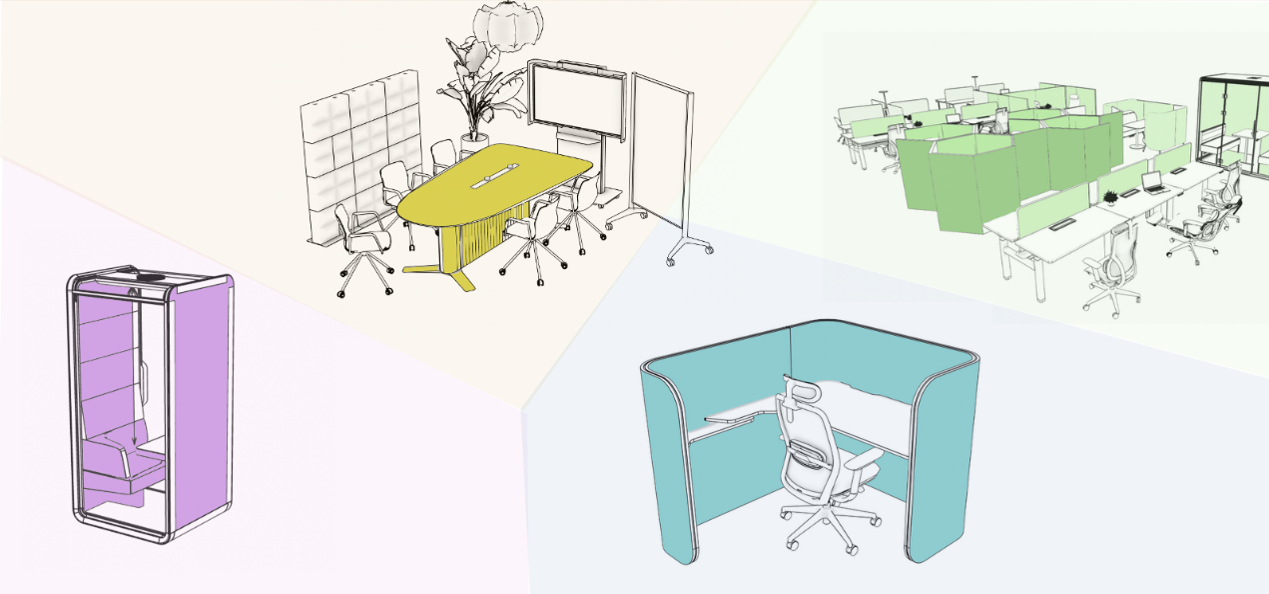
As a result, AI-era workplaces are evolving around four core environments: focused spaces that support deep individual thinking, agile collaboration spaces that enable real-time communication, social and restorative spaces that encourage connection and recovery, and innovation spaces that foster co-creation and new ideas.
Focus Zone
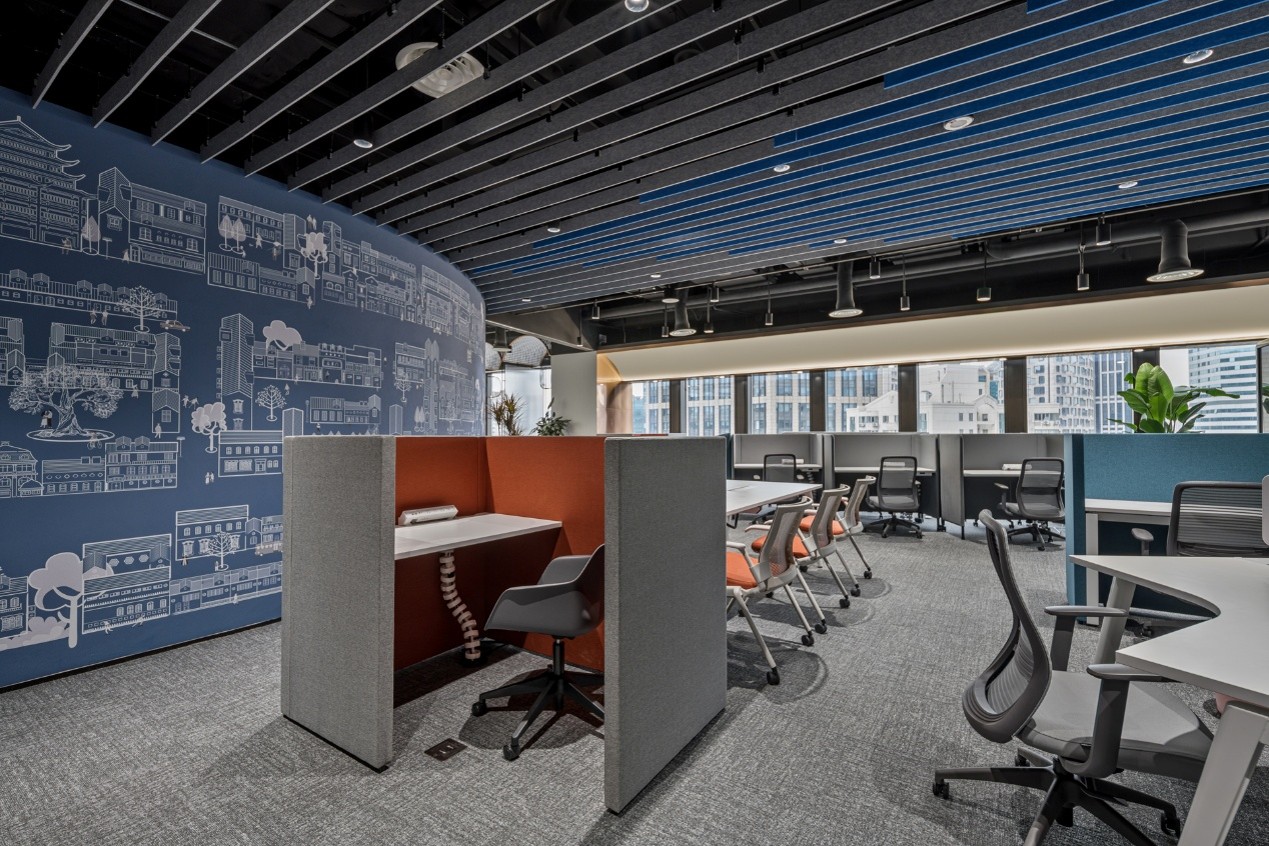
In an era of abundant information and AI-generated content, the ability to focus and make thoughtful decisions becomes increasingly valuable. The Focus Zone provides a calm, low-distraction environment that supports independent analysis, content creation, and tasks requiring privacy and deep concentration.
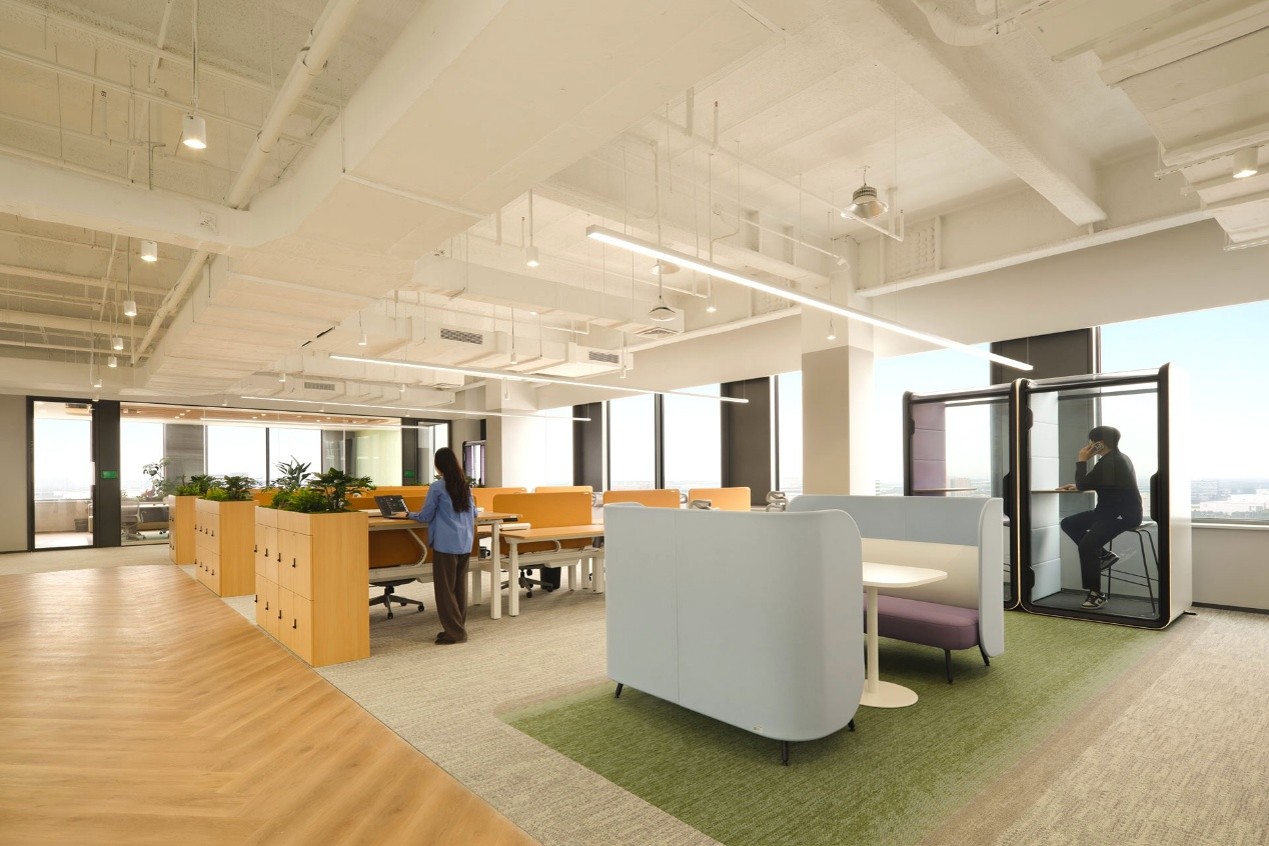
The space can be composed of individual workstations, quiet booths, and dedicated focus areas. Different levels of privacy can be created based on usage time and confidentiality needs, helping employees enter and maintain a state of sustained focus.
As employees may engage in extended conversations with AI through voice or digital interfaces, privacy, screen protection, and device accessibility become essential considerations. These spaces do not need to be completely isolated, but should maintain an appropriate balance between openness and active collaboration.
Agile Zone
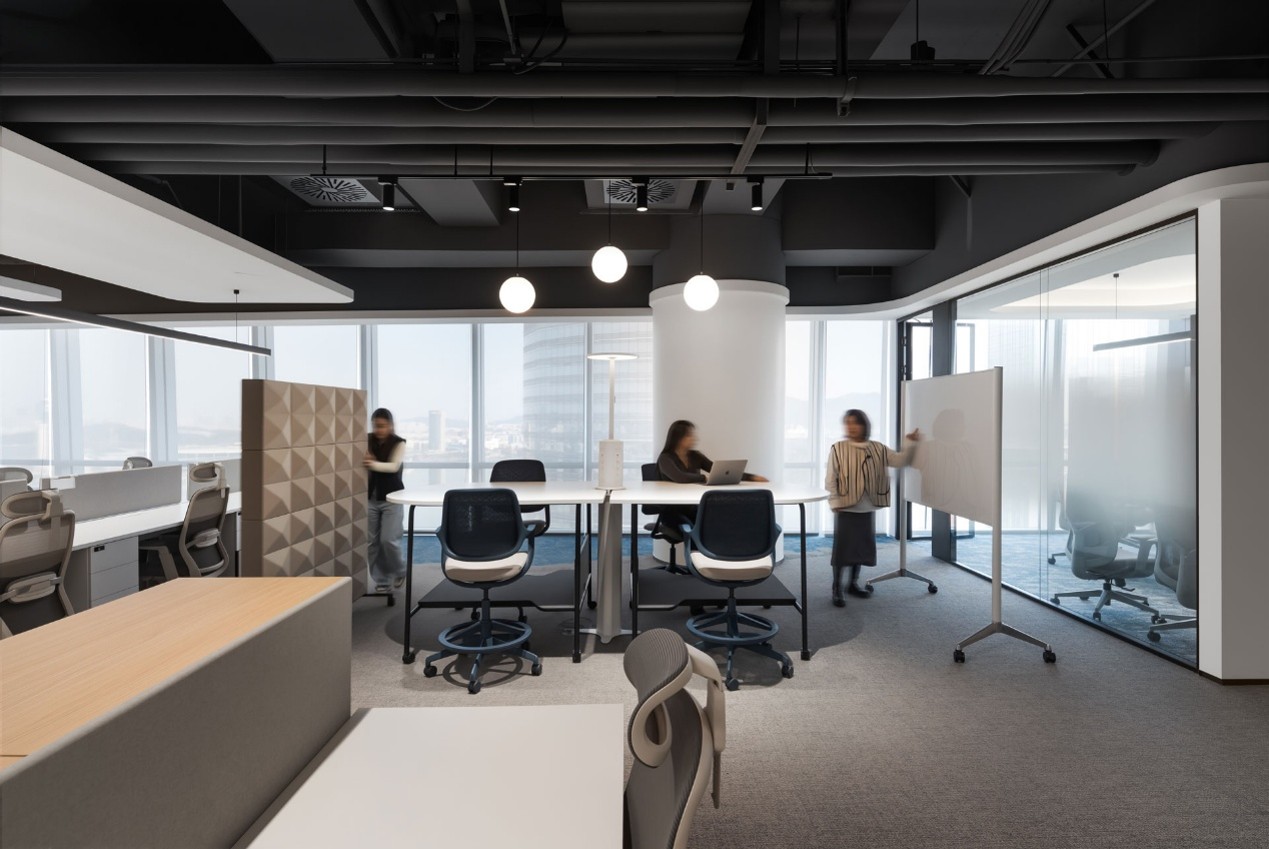
With the rise of AI-powered tools, daily collaboration is no longer limited to formal meetings. Real-time communication around specific tasks is becoming increasingly important, allowing employees to quickly access information, exchange ideas, and align on next steps.
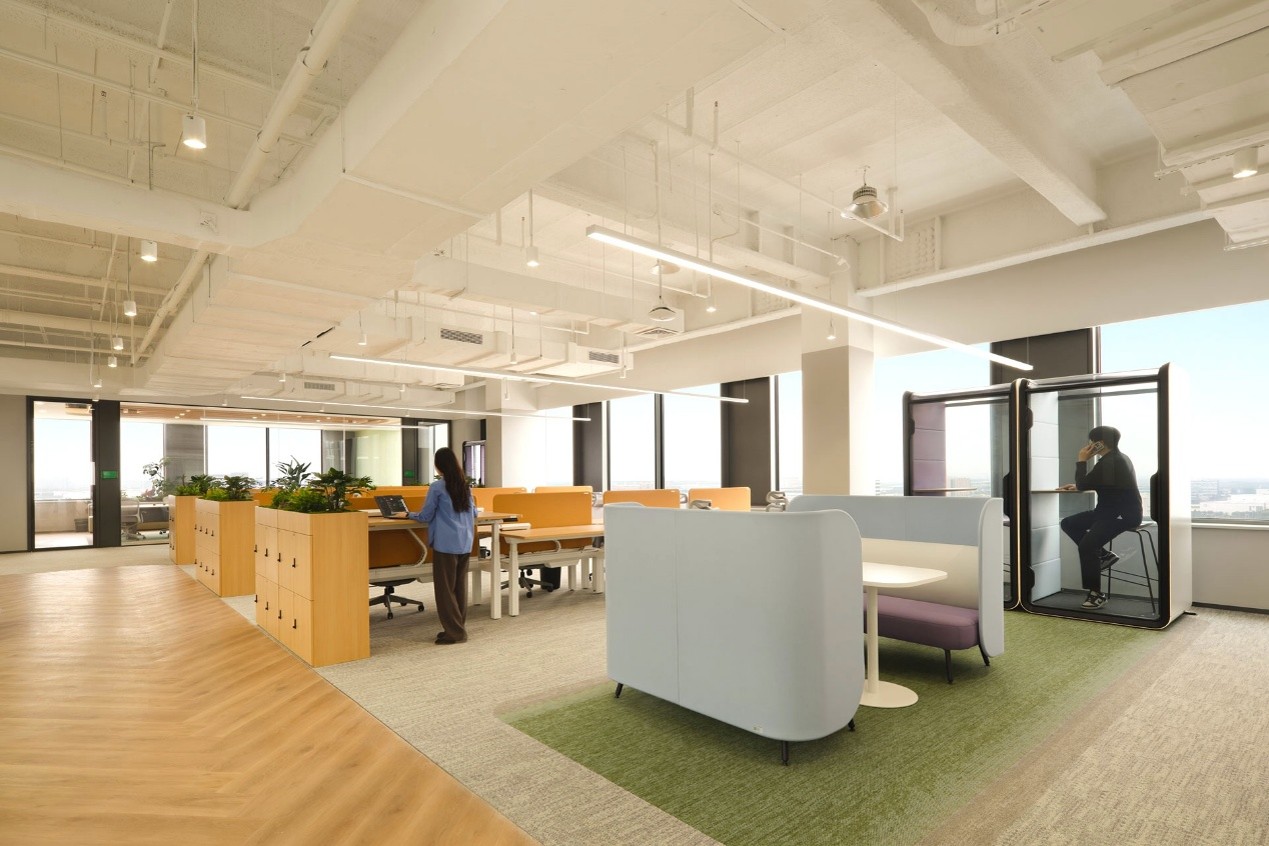
Located near primary work areas, the Agile Zone focuses on small-group interactions and rapid collaboration. Spaces can be easily adapted based on team size and discussion formats. Semi-open layouts help maintain visibility while minimizing noise impact on surrounding areas.
Social Hub
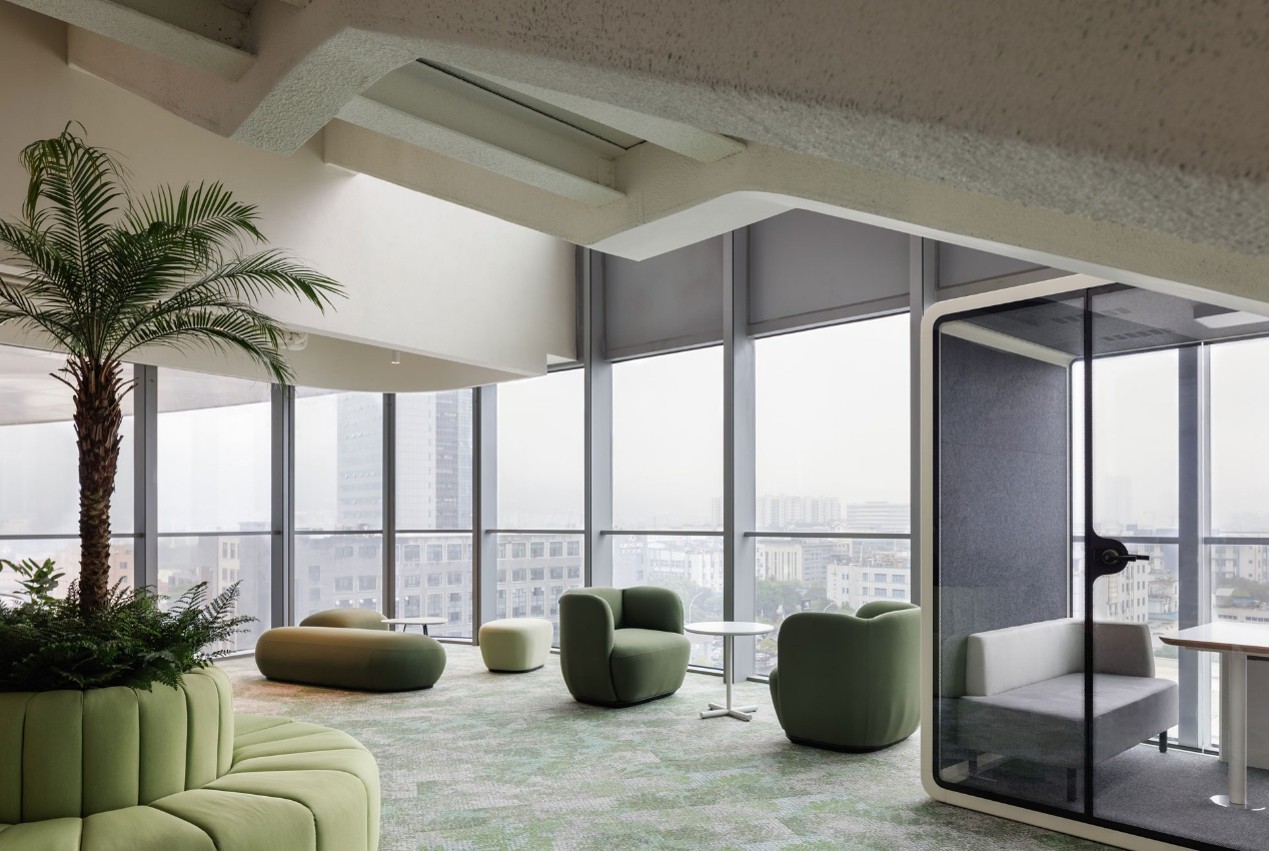
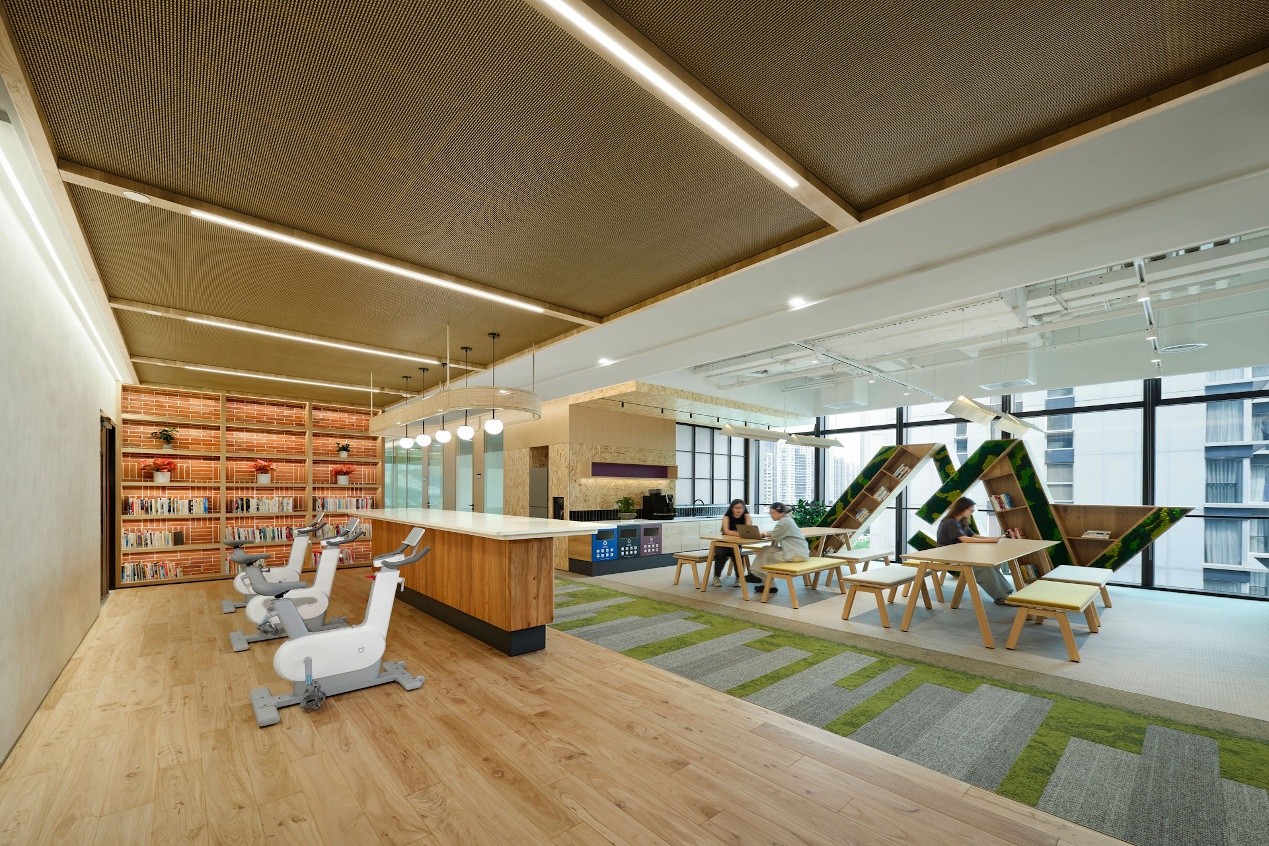
In the AI era, workplaces need to support not only efficiency, but also moments of recovery and renewal — helping people pause, recharge, and regain creativity and clarity.
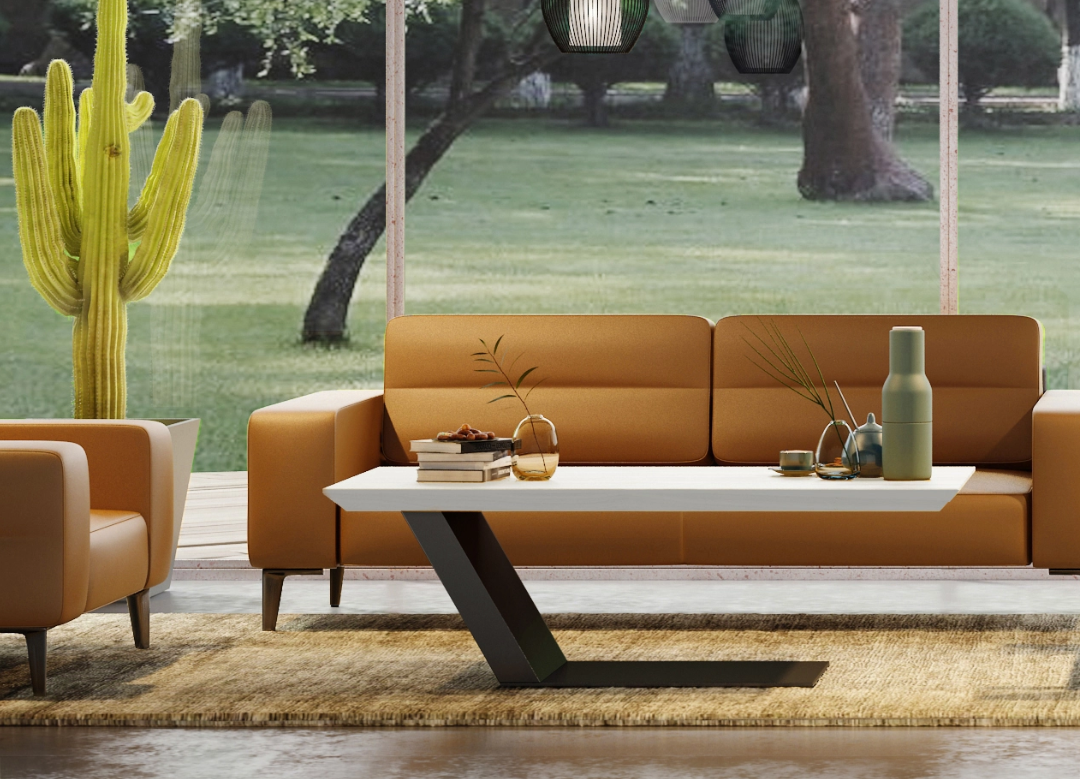
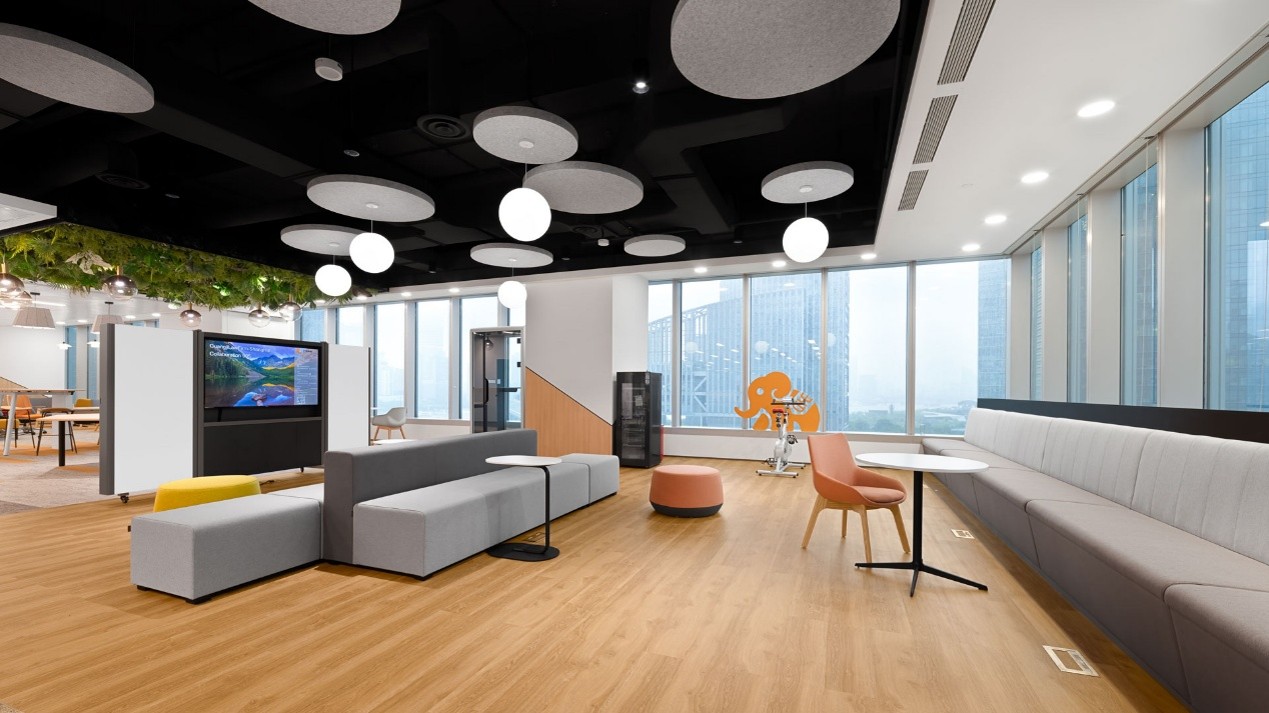
The Social Hub combines coffee breaks, relaxation, informal conversations, and short periods of restoration. Open seating encourages casual interactions, while quieter corners provide space for individual reflection, reading, or organizing thoughts. Natural light, greenery, soft textures, and warm materials create a distinct atmosphere from traditional work areas.
Through thoughtful choices of materials and ambiance, the space establishes a comfortable transition between focused work and social connection.
Co-Creation Lab
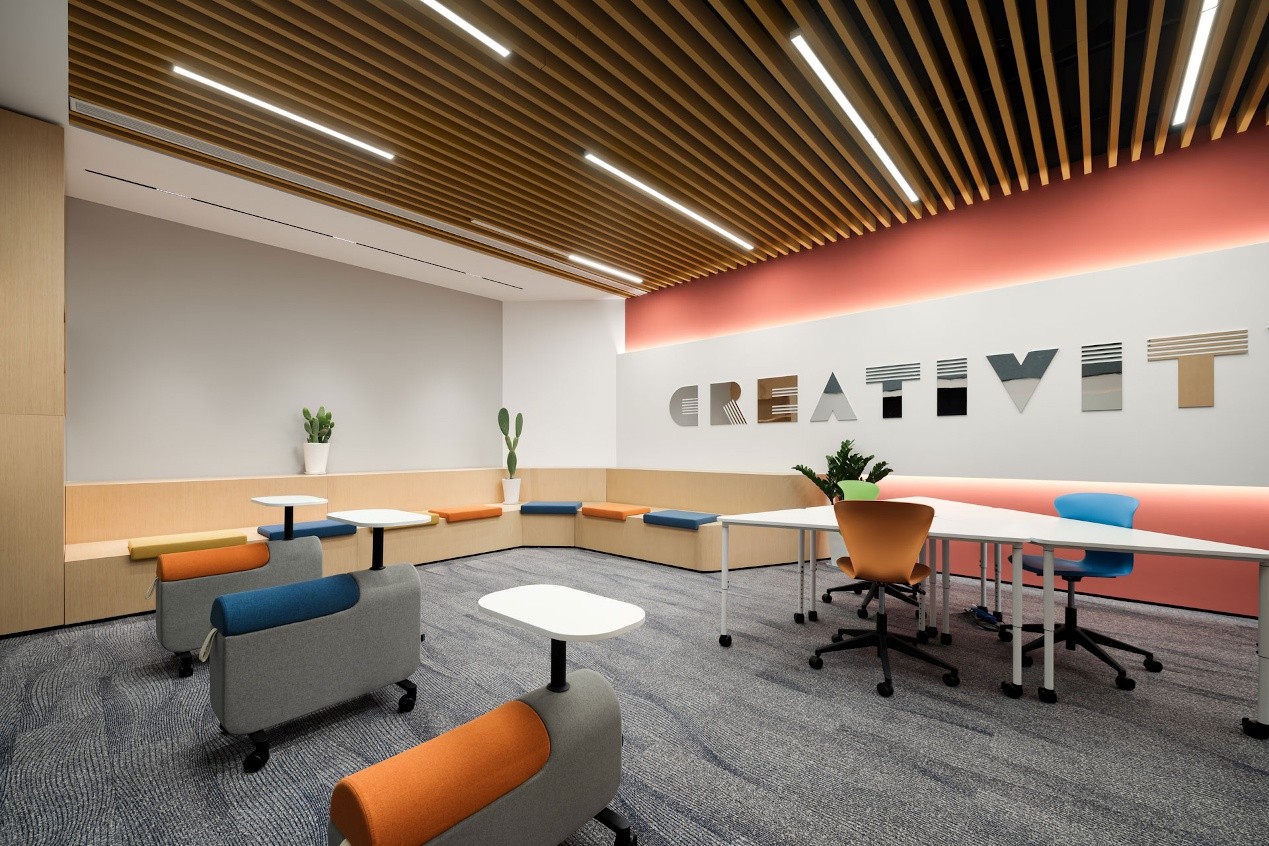
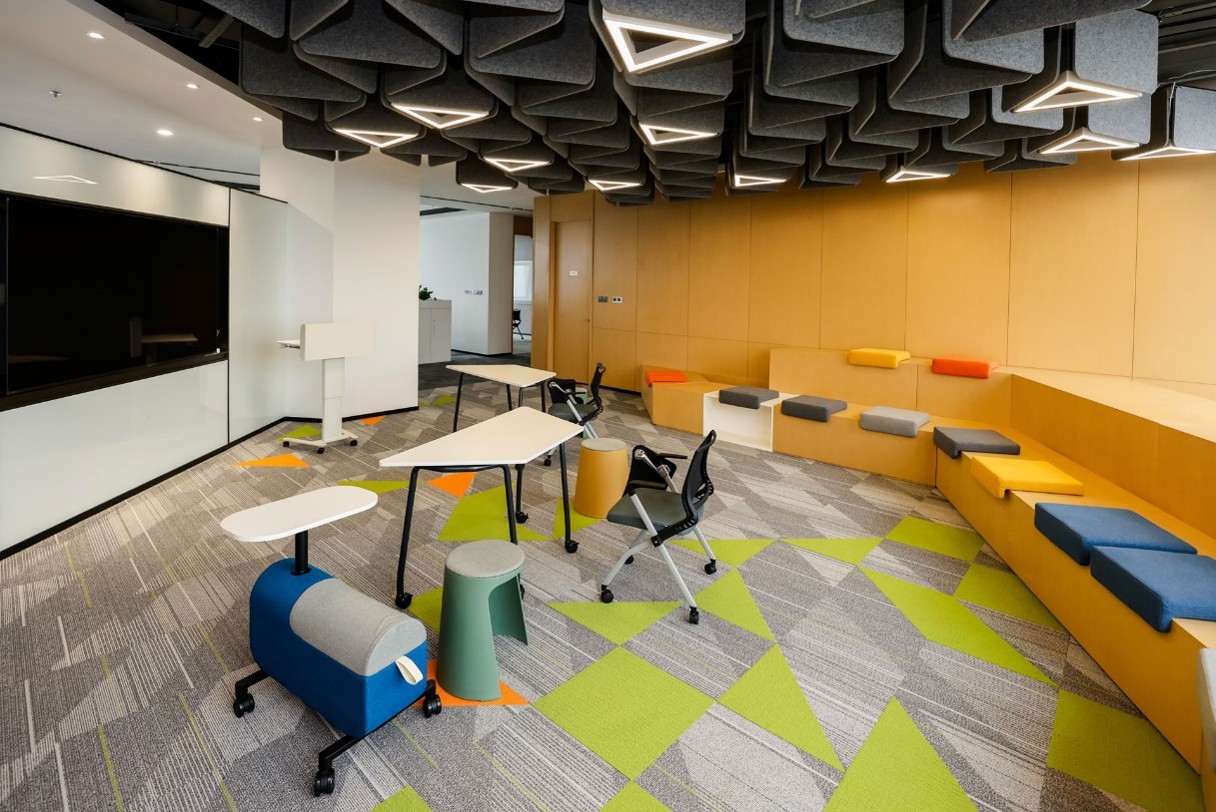
When teams develop ideas, refine solutions, or present proposals, the workplace needs to support not only discussion, but also the visualization and evolution of ideas.
The Co-Creation Lab is designed around collaborative creation — enabling focused discussions, team brainstorming, solution testing, and outcome sharing. AI-generated content, including text, images, and data, can be seamlessly integrated into the space, combining digital insights with team expertise and real-world judgment to create more complete solutions.
Rather than being designed around fixed seating arrangements, the space adapts around the flow of ideas — allowing people to move freely, capture insights instantly, and transition smoothly
The evolution of AI-era workplaces is centered on embracing the diverse ways people work — balancing focused concentration with creative collaboration, individual exploration with open teamwork, and productivity with moments of ease and restoration.
By creating a variety of work environments, offices are moving beyond fixed functional layouts and becoming adaptive ecosystems that evolve with changing needs — empowering employees to unlock their potential and enabling a more sustainable future of work.
© 2024- NOVAH. All rights reserved.